
Why James Hardie Siding Is Built for Coastal South Carolina Homes
Special Offer
7.5% OFF Your Deck or Siding Project!*
*Up to $7500 OFF
A Better Fit for Homes That Deal With Heat, Humidity, and Storm Season
Choosing siding in coastal South Carolina isn’t just about curb appeal. Your exterior has to deal with long humid summers, heavy rain, and storm season. Those conditions can be hard on materials that weren’t designed for this kind of environment.
That’s why many homeowners in the Charleston and Myrtle Beach areas choose James Hardie fiber cement siding. It’s built to resist moisture, rot, pests, heat-related movement, and everyday coastal wear. Contract Exteriors has installed more James Hardie siding in South Carolina than any other contractor since 2012, so we understand how the product performs in this region and what it takes to install it correctly.
What Makes Fiber Cement a Strong Choice in This Climate
Coastal siding has to remain stable through moisture, heat, and changing weather. Wood can swell or rot when it absorbs moisture. Vinyl can expand, soften, buckle, or fade after years of sun and heat exposure. Fiber cement is different because it’s designed to hold its shape and resist many of the problems that affect those materials.
James Hardie siding is also dense, which helps it withstand weathering and impacts better than softer exterior materials. For homes closer to the ocean, marsh, or open wind exposure, that added durability can make a meaningful difference over time.
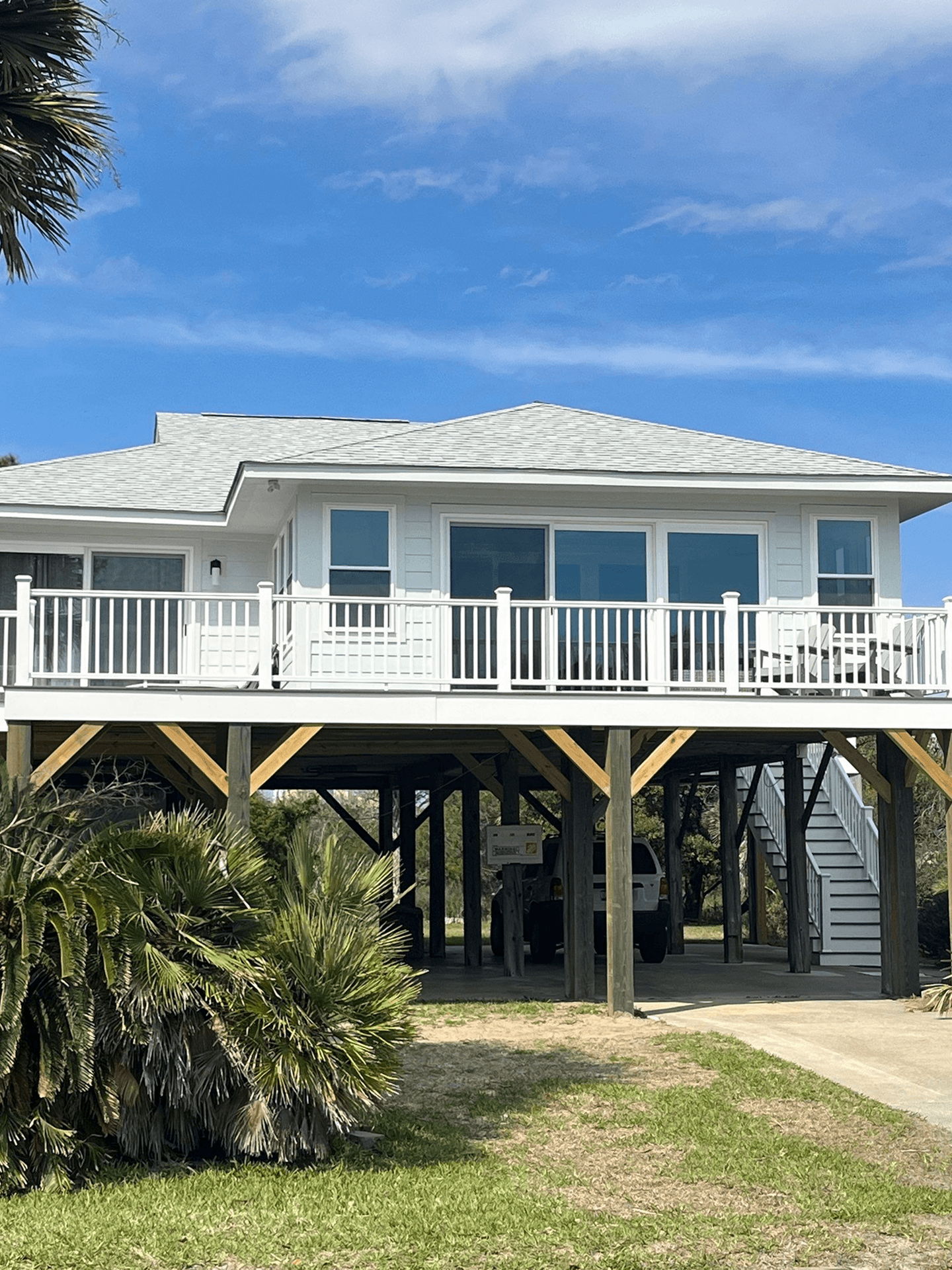
James Hardie also meets Miami-Dade County wind and impact resistance standards, which are relevant for storm-prone coastal areas. While no siding product can make a home stormproof, choosing a tested material and installing it correctly gives your exterior a stronger foundation for long-term performance.
James Hardie vs. Vinyl Siding
James Hardie and vinyl siding can both make sense, depending on the home, budget, and level of exposure. The better choice comes down to what you want the siding to do and how long you expect it to perform.
Vinyl siding usually costs less upfront and can work well for homes with moderate exposure. It’s a practical option for some projects, especially when budget is the leading factor.
James Hardie siding is typically the better fit when long-term durability, weather resistance, paint retention, and impact performance are higher priorities. Its ColorPlus factory-applied finish is designed to resist fading and chipping, which can help reduce maintenance over time in a humid, high-sun coastal climate.
For homeowners comparing both materials, our vinyl vs. fiber cement comparison offers a closer look at cost, upkeep, and performance differences.
James Hardie Siding Styles for Coastal Homes
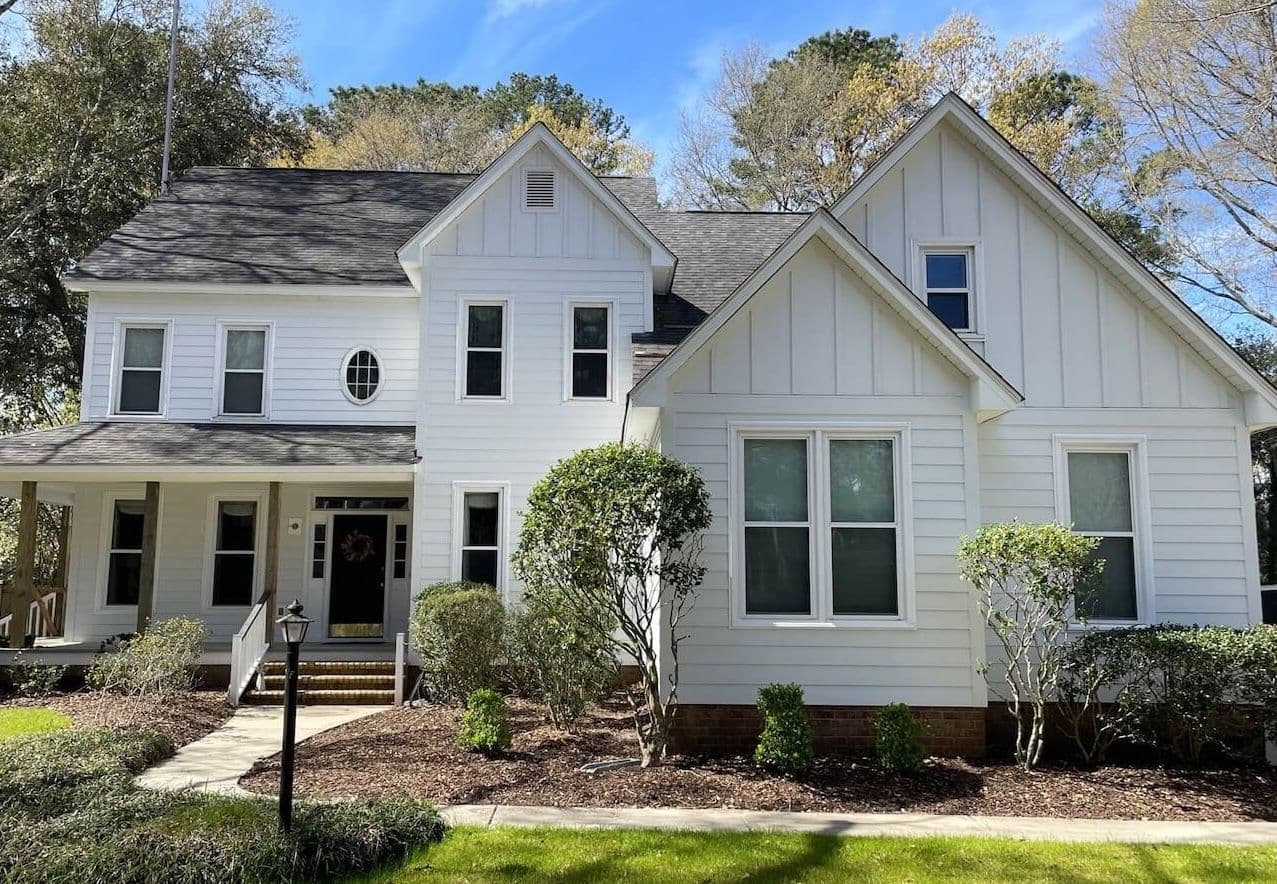
James Hardie is not a one-look product. It comes in several profiles, which makes it easier to match the siding to your home’s architecture.
Lap Siding: A traditional horizontal profile that works well on many Charleston, Myrtle Beach, and coastal South Carolina homes.
Vertical Panels: A clean, modern option often used on contemporary homes or as an accent.
Shake and Shingle Siding: A textured profile that gives the look of cedar shake without the same fire, moisture, or maintenance concerns.
Board and Batten Siding: A vertical style that adds depth, contrast, and a more architectural look.
Each profile offers the same core fiber cement benefits, but the finished look can feel very different.
Warranty Coverage That Supports the Investment
James Hardie siding includes a 30-year manufacturer's warranty on siding materials, providing homeowners with long-term product coverage. Contract Exteriors adds our own 7-year workmanship warranty, which covers the quality of the installation.
Both warranties matter. The manufacturer's warranty covers the product itself, while the workmanship warranty covers how the siding is installed, flashed, fastened, and finished. In a coastal environment, that installation layer is especially important because moisture and wind can quickly expose weak points.
Why Installation Quality Matters With James Hardie
James Hardie is a high-performing siding product, but it still needs to be installed the right way. Proper fastening, flashing, spacing, sealing, and moisture management all affect how well the siding performs over time.
Contract Exteriors follows a 60-step internal process on every siding project to keep those details consistent. That process helps our team stay organized from the first inspection through the final walkthrough, while giving homeowners a clearer experience from start to finish.
Our experience with James Hardie has also earned us Elite contractor status, the GuildQuality Guildmaster Award with Distinction for 10 consecutive years, and the BBB Torch Award for Ethics for three years in a row. You can see examples of our completed work in our project gallery.
Areas We Serve
Contract Exteriors serves homeowners across coastal South Carolina from our Charleston and Murrells Inlet offices, including:
Lowcountry: Charleston, Mt. Pleasant, Summerville, James Island, Daniel Island, and nearby communities
Grand Strand: Myrtle Beach, North Myrtle Beach, Murrells Inlet, Litchfield, Pawleys Island, Conway, Horry County, and surrounding areas
Visit our service areas page for the full list of communities we serve.
Frequently Asked Questions About James Hardie Siding
The lifespan of James Hardie siding depends on your home’s exposure, installation quality, and maintenance, but it’s designed for long-term performance in demanding climates like coastal South Carolina.
Yes, James Hardie usually costs more upfront than vinyl siding. Many homeowners choose it because it offers stronger durability, better long-term paint retention, and lower maintenance needs over time. The best value depends on how long you plan to stay in the home and what level of performance you want.
James Hardie meets Miami-Dade County wind and impact resistance standards, which makes it a strong option for storm-prone coastal areas. However, performance depends heavily on correct installation, including fastening, flashing, and moisture protection.
Yes. James Hardie offers lap siding, vertical panels, shake, shingle, board and batten, and trim profiles, making it suitable for many coastal home styles. Some historic or HOA-regulated areas may have additional requirements, so product and profile selection should be reviewed before the project begins.
Financing is available for qualifying projects. Visit our project financing and special offers page for current details.
Talk to a Coastal South Carolina James Hardie Siding Contractor
James Hardie siding can be a smart investment for homeowners who want a durable, attractive exterior built for coastal conditions. Contract Exteriors can help you compare profiles, colors, budget considerations, and installation details so you can make a clear decision for your home. Contact us today to schedule a consultation.